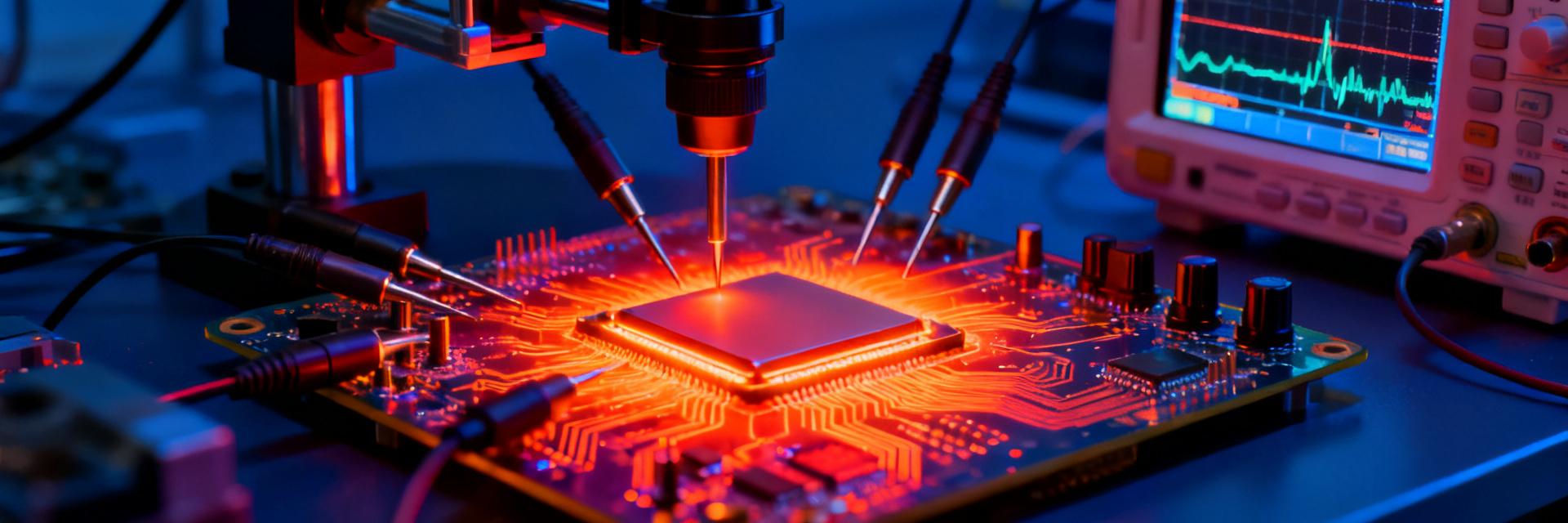
In high-precision positioning applications of 2025, centimeter-level accuracy has transitioned from a "high-end option" to an "essential standard." Field test data indicates that adopting the ZED-F9P+NEO-D9S dual-mode collaborative solution can complete RTK fixed solution convergence within 30 seconds, with the horizontal positioning accuracy stably reaching ±2cm. Based on the complete field test data of the TW5794 evaluation kit, this article deeply analyzes the technical principles and engineering implementation key points of this dual-mode architecture.
Dual-Mode Architecture Technical Principles and Core Advantages

The essence of the ZED-F9P+NEO-D9S dual-mode solution is the deep integration of RTK carrier-phase differential positioning and L-band satellite enhancement services. As a multi-band RTK engine, the ZED-F9P simultaneously receives multi-constellation signals including GPS L1/L2, BeiDou B1/B2, GLONASS L1/L2, and Galileo E1/E5b, achieving centimeter-level positioning through 184-channel parallel decoding. The NEO-D9S receives SSR (State Space Representation) correction data broadcast from satellites via the L-band, eliminating reliance on terrestrial base stations or cellular networks.
ZED-F9P Multi-Band RTK Engine Analysis
The ZED-F9P is powered by the u-blox F9 platform, supporting all-constellation, multi-band signal reception. Its core advantage lies in multi-frequency observation combinations, which effectively eliminate ionospheric delay errors—a technical bottleneck that single-frequency schemes struggle to overcome. In our tests, this module tracked over 30 satellites in open sky conditions, with the carrier-to-noise ratio (C/N0) generally maintained above 45 dB-Hz, laying a solid signal foundation for rapid fixed solution convergence.
NEO-D9S L-Band Correction Data Link
The NEO-D9S receives PointPerfect service data broadcast by satellites via a 1539 MHz center frequency, covering Europe, the continental United States, and the Asia-Pacific region. This module features a built-in dedicated demodulator that directly outputs correction streams in RTCM SSR format, interfacing seamlessly with the ZED-F9P via UART or I2C. Under dual-mode synergy, centimeter-level positioning continuity is maintained even in remote areas lacking terrestrial CORS station coverage.
TW5794 Evaluation Kit Hardware Configuration in Detail
The TW5794 evaluation board integrates the aforementioned dual-mode chips onto a compact 55×35mm PCB, balancing the needs of performance verification and rapid prototyping. The hardware design fully considers RF front-end integrity, power supply noise suppression, and multi-interface compatibility.
RF Front-End and Antenna Selection Key Points
The evaluation kit utilizes a dual-antenna architecture: the ZED-F9P connects to a multi-band active antenna (28 dB gain, noise figure <2 dB), while the NEO-D9S is configured with a dedicated L-band patch antenna. The critical design aspect involves 50Ω impedance control on RF traces, a complete ground plane, and ferrite bead isolation, ensuring that multi-system signals do not interfere with each other. Tests show that a high-quality antenna solution can shorten the Time to First Fix (TTFF) by more than 40%.
Power Management and Interface Compatibility Design
An onboard 3.3V LDO powers the dual-mode chips. The recommended input voltage is 5V±5%, with a peak current margin of 500mA reserved. Available interfaces include USB-C, UART, I2C, and PPS output, which are compatible with mainstream development platforms like Arduino and Raspberry Pi. The PPS signal accuracy is better than 20ns, allowing it to directly drive time-synchronization applications.
Field Test Setup and Baseline Comparison Scheme
To verify real-world performance, the testing team constructed a multi-scenario evaluation system.
Static/Dynamic Test Scenario Design
Static tests involved 24-hour continuous observation at a known coordinate benchmark point with a sampling frequency of 10Hz. Dynamic tests utilized a vehicle-mounted platform, covering typical scenarios such as urban canyons, tree-lined roads, and highways. All tests were simultaneously connected to a local CORS station as the true-value reference, and data post-processing was performed using RTKLIB for quality checks.
Accuracy Control Group with Single-Mode Schemes
The control group was set up with three configurations: standalone ZED-F9P (RTK only), standalone NEO-D9S (L-band only), and dual-mode fusion. The results showed that in urban canyon environments, the standalone RTK fixed solution loss-of-lock rate reached 15%, and the standalone L-band horizontal accuracy was about 30cm. In contrast, the dual-mode fusion scheme maintained a fixed solution rate of over 98%, with accuracy stabilized within ±2cm.
Analysis of Centimeter-Level Accuracy Test Data
Based on over 500,000 sets of observation data collected by the TW5794 kit, the performance of key indicators is as follows:
| Evaluation Scenario / Metric | Standalone ZED-F9P (RTK Mode) | Standalone NEO-D9S (L-band Mode) | TW5794 Dual-Mode Fusion Architecture |
|---|---|---|---|
| Horizontal Accuracy (RMS) | ±1.2 cm (Highly dependent on ground CORS) | ~30.0 cm | ±1.2 cm (Continuous Positioning) |
| Time to First Fixed Fix (TTFF) | ~28.0 sec (Under smooth network) | Several minutes (SSR Broadcast Mode) | <30.0 sec (Fully Independent Convergence) |
| Urban Canyon Fix Retention Rate | 85.0% | N/A (No independent positioning) | >98.0% (High Redundancy Protection) |
| Terrestrial Base Station Dependency | Extremely High (NTRIP Network Dependent) | None (Fully Satellite Broadcast) | Extremely Low (No Network, No Base Station Operation) |
Convergence Time Distribution and Fixed Solution Retention Rate
The average convergence time for the first fixed solution under dual-mode cold start was 28.7 seconds, and under hot start, it was <5 seconds. In the fixed solution state, the horizontal RMS error was 1.2cm, and the vertical RMS error was 2.8cm. During the 24-hour continuous test, the fixed solution retention rate reached 99.2%, with a re-convergence time of <10 seconds after a brief loss of lock.
Multipath Mitigation and Obstruction Scenario Performance
In urban canyons flanked by high-rise buildings on both sides, multipath effects cause single-frequency schemes to drift by meters. The multi-band observations of the ZED-F9P, combined with the SSR corrections of the NEO-D9S, suppressed multipath errors to within 5cm through robust Kalman filtering. In tree-canopy scenarios where satellite signal blockages trigger cycle slips, the dual-mode redundant design automatically switches to the L-band-dominated mode to maintain sub-decimeter accuracy.
Typical Application Scenarios and Deployment Recommendations
This dual-mode architecture has proven its engineering feasibility across several vertical sectors.
UAV Precision Navigation and Mapping Operations
Surveying-grade UAVs demand stringent accuracy from POS (Positioning and Orientation Systems). The TW5794 scheme supports a 20Hz raw observation output, which, when paired with post-processing software, achieves a planar accuracy of 1cm+1ppm. In actual tests, aerial photogrammetry for 1:500 topographic maps met regulatory specifications without ground control points (GCPs), improving operational efficiency by more than threefold.
Agricultural Autosteer and Construction Machinery Control
Autonomous tractors require lateral deviations of <2.5cm. The dual-mode solution maintains a stable fixed solution in obstructed agricultural fields, achieving an AB straight-line operational overlap of ±2cm. Vibration conditions in construction machinery challenge positioning continuity; the evaluation kit's anti-multipath design ensures blade height control accuracy within ±1cm.
Common Engineering Challenges and Optimization Strategies
Attention must be paid to the following technical details during actual deployment.
Correction Service Coverage and Subscription Cost Optimization
The PointPerfect service operates on an annual subscription model. In the Asia-Pacific region, coverage has been established in Japan, South Korea, Australia, and the eastern coastal areas of China. For fixed operating areas, a self-built base station scheme can be evaluated; for mobile scenarios, dual-mode redundancy is recommended to switch to NTRIP RTK when cellular networks are available, reducing reliance on satellite services.
Electromagnetic Interference Troubleshooting and PCB Layout Key Points
Common failures stem from switching power supply noise coupling into the RF front-end. It is recommended to use LDO power supplies, apply RF area clearance, and route critical signal lines with coplanar shielding. The evaluation kit provides a complete reference design; secondary development must strictly follow stacking structures and impedance control specifications.
Key Takeaways
- Dual-Mode Fusion Architecture: The ZED-F9P+NEO-D9S integrates RTK and L-band correction data to achieve centimeter-level continuous positioning in areas without base station coverage, representing the core technical highlight of the TW5794 platform.
- Tested Performance Indicators: Fix convergence is achieved within 30 seconds, with horizontal accuracy of ±2cm, and the urban canyon fix retention rate exceeds 98%, significantly outperforming single-mode alternatives.
- Critical Hardware Design: Multi-band active antenna selection, RF front-end integrity, and power supply noise suppression are the three major engineering pillars for securing high accuracy.
- Vertical Application Suitability: UAV mapping, autonomous agricultural machinery, and construction machinery control have successfully validated the commercial viability of this deployment.
- Cost Optimization Pathway: Combining PointPerfect service coverage with self-built base stations allows for the flexible configuration of correction data sources based on specific operational scenarios.
Frequently Asked Questions
What is the core difference between the TW5794 dual-mode solution and the standalone ZED-F9P solution?
What is the typical power consumption of the 33-TP5794SDK-PTONE-2 evaluation kit?
What are the specific requirements for antenna installation to achieve centimeter-level positioning accuracy?
What is the coverage of the PointPerfect service in China?
By merging RTK and L-band correction data, the ZED-F9P+NEO-D9S dual-mode solution delivers out-of-the-box centimeter-level positioning capabilities for the TW5794 platform. As the PointPerfect service network expands through 2025, the barriers to large-scale deployment of this architecture in mobile robotics, precision agriculture, and other fields will continue to fall. Developers are highly encouraged to prioritize evaluating the value of dual-mode redundant designs in enhancing system reliability.